Short answer: most damaged floors do not need replacing. Scratches, dents, water stains, squeaks, loose planks and worn finish are all repairable, usually for a fraction of replacement cost. Replacement becomes the right call when damage is widespread, when the wear layer is gone, or when the subfloor beneath has failed.
This guide covers what can realistically be repaired on each floor type, roughly what repairs cost in New Jersey, and how to tell when repair stops being the economical answer.
What Can Be Repaired, By Floor Type
Hardwood and engineered hardwood
The most repairable of all floor types. Surface scratches and dull finish can often be fixed with a screen-and-recoat, which abrades the existing finish and applies a fresh coat without sanding into the wood — a fraction of the cost and mess of a full refinish. Deeper scratches, gouges and dark water stains need sanding, which solid hardwood tolerates many times over and engineered hardwood tolerates once or twice depending on veneer thickness. Individual damaged boards can be cut out and replaced, though matching an aged finish takes skill. Our floor refinishing service covers both approaches.
Luxury vinyl plank and tile
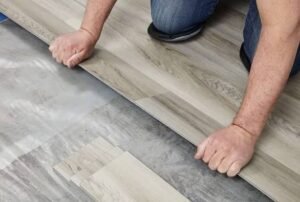
Individual planks can usually be replaced, which is one of LVP’s underrated advantages. Floating installations allow planks to be unclicked back to the damaged board; glue-down planks are cut out and reset. The practical obstacle is matching — colours are discontinued regularly, which is why keeping a box of leftovers from the original install is worth the storage space.
Laminate
Swollen or water-damaged boards cannot be restored and must be replaced. As with LVP, floating floors allow replacement of individual planks. Surface scratches on laminate cannot be sanded — the wear layer is a printed image with a hard coating, and once through it, replacement is the only option.
Tile
Cracked tiles can be removed and replaced individually. Failing or discoloured grout can be raked out and regrouted, which transforms the appearance of a tired floor for very little money. Recurring cracked tiles across a floor are a different problem — that indicates subfloor movement, and replacing tiles without fixing the deflection just repeats the failure. See our tile flooring page.
Carpet
Burns, stains and small damaged areas can be patched with material from a closet or an offcut. Ripples and buckling are usually a stretching issue rather than a wear issue and can be power-stretched back flat. Delamination and matted traffic paths signal end of life. See carpet installation.
Common Problems and What They Actually Mean
| Symptom | Likely cause | Typical fix |
|---|---|---|
| Squeaking underfoot | Subfloor moving against joists or fasteners | Refasten subfloor; usually repairable from above |
| Springy or bouncy spot | Joist deflection or damaged subfloor | Structural — needs assessment before any new floor |
| Gaps between boards in winter | Low indoor humidity, normal seasonal movement | Usually no repair needed; manage humidity |
| Cupped boards (edges raised) | Moisture from below | Find and fix the moisture source first |
| Dark stains on wood | Water or pet urine reaching the wood | Sanding, or board replacement if deep |
| Dull traffic paths | Worn finish, not worn wood | Screen and recoat |
| Loose or clicking planks | Failed locking joint or adhesive | Replace affected planks |
| Repeatedly cracking tiles | Excess subfloor deflection | Stiffen the floor structure, then re-tile |
Repair or Replace: How to Decide
Repair usually makes sense when: damage is confined to under about 20 per cent of the floor, the floor is otherwise sound and level, the wear layer or wood thickness has life left, and matching material is available.
Replacement usually makes sense when: damage is spread across the whole floor, the wear layer is worn through, the subfloor has failed and must be opened up anyway, or the floor is already near the end of its service life. If you are considering replacement, our NJ flooring cost guide covers what that runs.
One honest rule of thumb: when a repair estimate reaches roughly half the cost of replacement, replacement is usually the better decision, because a repaired floor still carries the age of the original.
Fix the Cause Before the Symptom
Nearly every flooring repair we are called to has a cause that will repeat if left alone. Cupped boards mean moisture is coming from somewhere. Repeatedly cracking tile means the floor structure moves. A squeak that returns means fasteners are working loose. Replacing the visible damage without addressing the source produces the same call again in a year, and any contractor who does not raise this is not doing the job properly.
Frequently Asked Questions
Can scratched hardwood floors be repaired without full refinishing?
Often, yes. Light surface scratches confined to the finish can be addressed with a screen-and-recoat, which costs considerably less than a full sand and refinish. Scratches you can catch a fingernail in have gone into the wood and need sanding.
Can water-damaged flooring be repaired?
It depends on the material and how far the water travelled. Hardwood that has cupped will often flatten as it dries and can then be sanded level. Laminate with a swollen core cannot be restored. Vinyl plank is usually unharmed, though the subfloor beneath may not be. In every case the moisture source must be fixed first.
How much does floor repair cost in New Jersey?
Small repairs such as replacing a few planks or patching carpet typically run a few hundred dollars including the call-out. A screen-and-recoat on hardwood generally costs a fraction of full refinishing. Structural subfloor repair is priced by the area involved. We quote repairs after seeing the floor, because the visible damage is often not the whole story.
Can you replace just a few planks in the middle of a floor?
Yes. Floating floors can be unclicked back to the damaged area, and glue-down planks can be cut out and reset. The limitation is matching — discontinued colours are common, which is why we always suggest keeping a spare box after any installation.
Why does my floor squeak, and can it be fixed?
Squeaks come from movement between the subfloor and the joists, or between flooring and subfloor. Most are repairable, frequently from above without lifting the floor. A squeak accompanied by a springy feeling underfoot is a different matter and should be assessed structurally.
Is it worth repairing an old floor?
Often yes, particularly with hardwood. Older solid hardwood is frequently denser, better-quality timber than anything comparable you could buy today, and refinishing it costs meaningfully less than replacement while preserving material you cannot buy back.
Get Your Floor Assessed
We will tell you honestly whether a floor should be repaired or replaced, including when repair is not worth your money. Contact J Brothers Flooring for an assessment across Middlesex County and our wider New Jersey service areas.