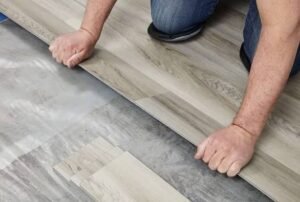
Choosing a flooring contractor in Middlesex County, NJ is less about picking a product and more about picking the people who will be in your home for a week. The floor itself is the easy part — most reputable brands perform close to their spec sheet. What separates a floor that still looks right in year eight from one that cups, gaps, or cracks in year two is almost always the preparation underneath it and the crew that laid it.
This guide walks through exactly how to check a New Jersey flooring contractor before you sign: how to verify their registration, what state law requires in your contract, what an itemised estimate should contain, and the six questions that will separate three quotes that all look identical on price. J Brothers Flooring has installed floors across Middlesex County since 2004, and this is the same checklist we would want a member of our own family to use.
How to Verify a Flooring Contractor’s NJ Registration Before You Sign
Every home improvement contractor working in New Jersey must register annually with the New Jersey Division of Consumer Affairs. Registration is not a skills test — it does not guarantee good work — but its absence tells you a great deal, and an unregistered contractor cannot legally pull a municipal permit for your job.
Find the registration number first
New Jersey requires a contractor’s Home Improvement Contractor (HIC) registration number to appear on all advertising, contracts, business documents, correspondence with customers, and commercial vehicles. If a contractor’s van, website, and written estimate all fail to show one, you have your answer before the conversation starts.
Verify it independently
Do not take a number at face value. Contact the New Jersey Division of Consumer Affairs directly to confirm the registration is current and to ask whether complaints have been filed against the business. This is one phone call and it is the highest-value ten minutes in the entire hiring process.
Ask for the insurance certificate itself
New Jersey requires registered home improvement contractors to carry a minimum of $500,000 per occurrence in commercial general liability coverage, and the law requires the contractor to provide you with a copy. Ask for the certificate, not a verbal assurance. Check two things on it: that the policy is current, and that the business name on the certificate matches the business name on your contract. A mismatch between the two is more common than homeowners expect.
Confirm who pulls the permit
A registered contractor pulls permits in their own name. If a contractor asks you to pull the permit as the homeowner, that shifts liability for the work onto you — and it is often a sign the contractor cannot pull one themselves.
What New Jersey Law Requires in Your Flooring Contract
New Jersey gives homeowners more protection than most people ever use. Three rules change how you should read an estimate.
Anything over $500 must be in writing
A verbal agreement for a flooring job is not a compliant contract in New Jersey. Any change to the original scope must also be put in writing — which is why a mid-job “while we’re in here anyway” suggestion should always come back to you as a written change order with a price attached, never a handshake.
You have three business days to cancel
After signing, you may cancel a home improvement contract for any reason before midnight of the third business day. A contractor pressuring you to waive that window, or pushing to start work inside it so cancelling becomes impractical, is telling you something useful about how they operate.
A real estimate is itemised
A single-line number is not an estimate — it is a figure you have no way to compare. A proper flooring estimate separates out material and grade, square footage, subfloor preparation, removal and disposal of the existing floor, trim and transitions, and specific start and completion dates. If subfloor preparation is missing entirely, the price will move once the old floor comes up. That is the single most common source of a surprise invoice in this trade. Our NJ flooring installation cost guide breaks down what each of those line items should reasonably run in 2026.
A note on deposits
A deposit that covers materials is normal and reasonable. A deposit approaching half the job value, requested before any material has been ordered or delivered, is not.
Comparing Three Quotes: The Six Questions That Actually Separate Contractors
Homeowners are always told to get three quotes, then given no framework for comparing them. Ask every contractor these six questions and write the answers side by side — the differences become obvious immediately.
| Question to ask | Why it matters |
|---|---|
| What is your NJ HIC registration number? | Unregistered contractors cannot pull permits |
| Does this price include subfloor preparation? | The most common source of mid-job change orders |
| Who pulls the permit, and in whose name? | Shifting it to you shifts the liability to you |
| What is the wear layer or thickness of the product quoted? | Two “LVP” quotes can be entirely different products |
| Who removes and disposes of the old flooring? | Frequently excluded, then added later |
| What are the written start and completion dates? | A verbal timeline is not a commitment |
Permits and the NJ Uniform Construction Code in Middlesex County
Not every flooring job needs a permit, and a contractor who tells you every job does — or that no job does — is worth a second look.
When a permit is generally required
Like-for-like replacement of floor covering usually does not require a permit. Work that involves structural repair, replacing subfloor sheathing, or altering plumbing or electrical typically does. Because enforcement sits with each municipality’s construction office under the New Jersey Uniform Construction Code, the practical answer varies between Edison, Piscataway, Woodbridge and the rest of the county — which is another reason a contractor who works here regularly is worth more than one who does not.
What the review process looks like
Where a permit is required, expect a plan review period before work begins and an inspection at completion. Build that into your timeline rather than discovering it the week you hoped to have furniture back in the room. We handle permit applications and inspections in our own name for every job that needs them across our New Jersey service areas.
Older Middlesex Homes: What Settling Does to a Floor
A large share of Middlesex County’s housing stock predates 1980, and a meaningful portion predates 1960. Older homes settle. That shows up as rooms that read slightly downhill, springy spots between joists, and gaps that open at the perimeter of a room in winter and close again in summer.
None of that makes a floor un-installable. It does change what should go down, and what has to happen before it does.
Why deflection testing comes before material selection
Ceramic and porcelain tile require a floor assembly that does not flex more than the L/360 deflection standard. Set tile over a floor that moves more than that and it will crack — not because the tile was cheap, but because the substrate was never going to hold it still. Where we find excess deflection, the options are to stiffen the assembly, sister the joists, or move to a material that tolerates movement, such as luxury vinyl plank. Skipping that check is the most common reason a tile installation fails inside two years.
Moisture testing on slabs and below grade
Basements and slab-on-grade rooms need a moisture reading before anything goes down, particularly for solid hardwood and engineered hardwood. Installing wood over a slab carrying too much moisture produces cupping within a season or two, and no finish or warranty will save it. Where readings are high, engineered products or luxury vinyl are the honest recommendation.
Hard Water, Grout and Tile Selection in Middlesex County
Water across much of Middlesex County tests in the hard range, which is why mineral spotting on tile and grout is such a routine complaint here. It is a small detail that shows up every day for the next decade, so it is worth getting right at selection.
Grout choice matters more than tile choice
Cement-based grout is porous and will hold mineral deposits over time. Where hard water contact is constant — shower floors, tub surrounds, entry areas — a high-performance or epoxy-based grout resists staining considerably better and stays closer to its original colour. This is the single most cost-effective upgrade in a bathroom flooring project.
Matte finishes hide what polished finishes show
Polished tile shows every water spot and limescale mark. Matte and textured surfaces disguise them, and they perform better underfoot when wet. If you are tiling a bathroom, look for a DCOF rating of 0.42 or higher — that is the ANSI slip-resistance threshold for level interior floors expected to be walked on wet. It is printed on the spec sheet, and any contractor should be able to point to it. The same logic applies in a kitchen flooring installation, where spills are constant.
Dust Containment: Why It Is Worth Asking About
Tearing out an old floor produces an enormous amount of fine dust, and sanding hardwood produces more. In an occupied home, that dust does not stay in the room being worked on — it moves through the HVAC system and settles everywhere for weeks.
HEPA-filtered, dust-contained equipment captures the overwhelming majority of it at the source. For homeowners with allergies, asthma, small children, or anyone working from home during the project, this is not a luxury upgrade; it is the difference between living in the house during the work and moving out. It also produces a better finish on floor refinishing jobs, because airborne dust that settles into a wet finish coat has to be sanded back out.
Ask any contractor you are considering whether their removal and sanding equipment is HEPA-filtered and dust-contained. The answer is quick and revealing.
Why a Local Middlesex County Contractor Outperforms a Big-Box Installer
National retailers sell flooring and subcontract the installation to whichever crew is available that week. The crew that measures is often not the crew that installs, and neither works for the company that sold you the floor. When something goes wrong, you are the one holding three phone numbers.
A local contractor carries the whole job: the measurement, the subfloor assessment, the permit, the installation, and the warranty conversation two years later. There is also a practical knowledge difference — a crew that works in Edison, Piscataway and the surrounding towns every week already knows the housing stock, the local construction offices, and which materials hold up in this climate.
Matching the Material to the Room
Most disappointing floors are not badly installed — they are the wrong product for the room. A short version of how we advise:
- Kitchens, bathrooms, basements, laundry rooms: waterproof luxury vinyl plank or tile. Our complete LVP guide for 2026 covers wear layers, core types and brand differences in detail.
- Living rooms, dining rooms, hallways: solid hardwood above grade, engineered hardwood where moisture or slab construction rules out solid.
- Bedrooms and stairs: carpet where warmth and sound absorption matter more than moisture resistance.
- Existing hardwood in reasonable condition: refinishing is usually a fraction of replacement cost and preserves original material you cannot buy back.
What Middlesex County Homeowners Say
[Replace this section with two verbatim reviews taken directly from the J Brothers Flooring Google Business Profile, attributed exactly as Google displays the reviewer’s name, with a link to the profile so readers can verify them. If there are not yet two published reviews from Middlesex County customers, leave this section out entirely until there are.]
Ready to Get an Itemised Quote?
We provide written, itemised estimates that separate material, subfloor preparation, removal and disposal, and labour — so you can compare our number to anyone else’s line by line. Contact J Brothers Flooring to arrange a free in-home measurement anywhere in Middlesex County.
FAQs About Hiring Flooring Contractors in Middlesex County
How do I check if a flooring contractor is registered in New Jersey?
Contact the New Jersey Division of Consumer Affairs to confirm the contractor’s home improvement registration is current and to ask whether any complaints have been filed. New Jersey also requires the registration number to appear on the contractor’s advertising, contracts and vehicles, so you should be able to find it before you even call.
Can I cancel a flooring contract after signing it?
Yes. New Jersey allows you to cancel a home improvement contract for any reason before midnight of the third business day after signing.
How much liability insurance should a flooring contractor carry in NJ?
Registered New Jersey home improvement contractors must carry at least $500,000 per occurrence in commercial general liability coverage, and they are required to provide a copy of the certificate on request.
Do I need a permit to replace flooring in Middlesex County?
It depends on the scope. Like-for-like floor covering replacement usually does not require a permit, while structural repair, subfloor replacement, or work affecting plumbing or electrical typically does. Your contractor should tell you which applies and pull the permit in their own name.
How much does flooring installation cost in Middlesex County?
Installed pricing in 2026 generally runs from about $5 to $15 per square foot depending on material and the amount of subfloor preparation required. Our NJ flooring cost guide breaks this down by material with what each line item should include.
How long does a flooring installation take?
Most single-room installations are completed in one to three days. Whole-home projects, subfloor repair, and hardwood refinishing with cure time run longer. Any contractor should give you written start and completion dates before work begins.